miércoles, 9 de marzo de 2016
The Tower of London
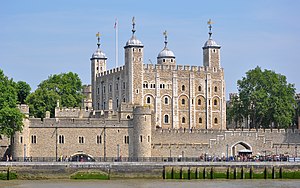
The Tower of London, officially Her Majesty's Royal Palace and Fortress of the Tower of London, is a historic castle located on the north bank of the River Thames in central London. It was founded towards the end of 1066 as part of the Norman Conquest of England. The White Tower was a resented symbol of oppression. It served as a royal residence, and it was its primary purpose, but the castle was used as a prison from 1100 to 1952. There were several phases of expansion. It has played a prominent role in English history.

martes, 8 de marzo de 2016
Architecture: General Layout
The Tower of London had the strongest and most impressive defences of the period. Probably, it dominated the surrounding area and controlled the traffic of the River Thames.
The castle is made up of three different parts or wards:
Here you have a wonderful picture in which you can see the layout more in detail.

The castle is made up of three different parts or wards:
- The innermost ward contains the White Tower and is the earliest phase of the castle.
- Surrounding it by the north, east, and west is the inner ward, built during the reign of Richard the Lionheart (1189–1199).
- Finally, there is the outer ward which surrounds the castle and was built under Edward I.
Although there were several phases of expansion, the general layout has remained more or less the same since Edward's rebuild in 1285.
Here you have a wonderful picture in which you can see the layout more in detail.
Architecture: the innermost ward
The innermost ward covers the south area of the White Tower, reaching to what was once the edge of the River Thames. This part was probably filled with wood buildings for the fundation of the Tower, but in 1170 the royal lodgings (or bedrooms) started to cover the innermost ward. The lodgings were renovated during the 1220s and 1230s, and at the same time, the construction of Wakefield and Lanthorn Towers also began. They probably served as private residences for the queen and king respectively.
But between 1666 and 1676, the innermost ward was transformed, and the palace buildings were removed. The area around the White Tower was cleared so that anyone approaching would have to cross open ground. The Jewel House was demolished, and the Crown Jewels moved to Martin Tower.
Here you can see an image. It is the interior of the innermost ward. On the right we can see the White Tower, and the WakeField Tower on the left. In the background of the left we also can see the east side of Traitor's Gate.

But between 1666 and 1676, the innermost ward was transformed, and the palace buildings were removed. The area around the White Tower was cleared so that anyone approaching would have to cross open ground. The Jewel House was demolished, and the Crown Jewels moved to Martin Tower.
Here you can see an image. It is the interior of the innermost ward. On the right we can see the White Tower, and the WakeField Tower on the left. In the background of the left we also can see the east side of Traitor's Gate.
Architecture: the inner ward
The inner ward of the Tower of London was created during Richard the Lionheart's reign, and Henry III created the east and north walls, and the dimensions remain to this day. Most of the job of this last man survives, and only two of the nine towers he constructed have been completely rebuilt.
The ward had 13 towers. Anti-clockwise, their names are: Bell, Beauchamp, Devereux, Flint, Bowyer, Brick, Martin, Constable, Broad Arrow, Salt, Lanthorn, Wakefield, and the Bloody Tower. The Beauchamp Tower was the first large-scale use of brick as a building material in Britain.
Each tower had a function: Bell Tower purpose was to raise the alarm in case of attack, in the Bowyer Tower, catapults, longbows and other siege and hand weapons were made, etc.
During a period of years, a range of buildings for the storage of munitions was built along the inside of the north inner ward.
The ward had 13 towers. Anti-clockwise, their names are: Bell, Beauchamp, Devereux, Flint, Bowyer, Brick, Martin, Constable, Broad Arrow, Salt, Lanthorn, Wakefield, and the Bloody Tower. The Beauchamp Tower was the first large-scale use of brick as a building material in Britain.
Each tower had a function: Bell Tower purpose was to raise the alarm in case of attack, in the Bowyer Tower, catapults, longbows and other siege and hand weapons were made, etc.
During a period of years, a range of buildings for the storage of munitions was built along the inside of the north inner ward.
Architecture: the outer ward
The third and last ward was created during Edward I's extension to the Tower. It has two bastions, the Legge's Mount and the Brass Mount, although they weren't built at the same time. It also had three rectangular towers, but they were dismantled in 1843.
A new gate was built in the south-west corner of the external wall circuit.
Edward extended the south side of the Tower of London onto land that had previously been submerged by the River Thames. In this wall, he built St Thomas's Tower between 1275 and 1279, later known as Traitors' Gate. It replaced the Bloody Tower.
In the image you can see the Tower of London's outer curtain wall, with the curtain wall of the inner ward just behind.

In the image you can see the Tower of London's outer curtain wall, with the curtain wall of the inner ward just behind.
lunes, 7 de marzo de 2016
The First Prisoner
Ranulf Flambard is the first recorded prisoner held in the Tower, he was also the first person to escape from it, using a rope secreted in a bottle of wine. He was held in luxury and permitted servants, but on 2 February 1101 he hosted a banquet for his captors. After their captors were drunk, when no one was looking he escaped by a secret chamber.
A Good Point In Defence
Most of the early Norman castles were built from wood, but by the end of the 11th century a few, including the Tower of London, had been renovated or replaced with stone.
The White Tower is the earliest stone castle keep in England, and was the strongest point of the early castle. It also contained grand accommodation for the king.

The White Tower is the earliest stone castle keep in England, and was the strongest point of the early castle. It also contained grand accommodation for the king.

Ghosts
Anne Boleyn was beheaded in 1536 for treason against Henry VIII; her ghost supposedly appears in the chapel of St Peter ad Vincula and has been said to walk around the White Tower carrying her head under her arm. Other reported ghosts include Henry VI, Lady Jane Grey, Margaret Pole, and the Princes in the Tower.
Suscribirse a:
Entradas (Atom)